Email: info@nocodepakistan,com
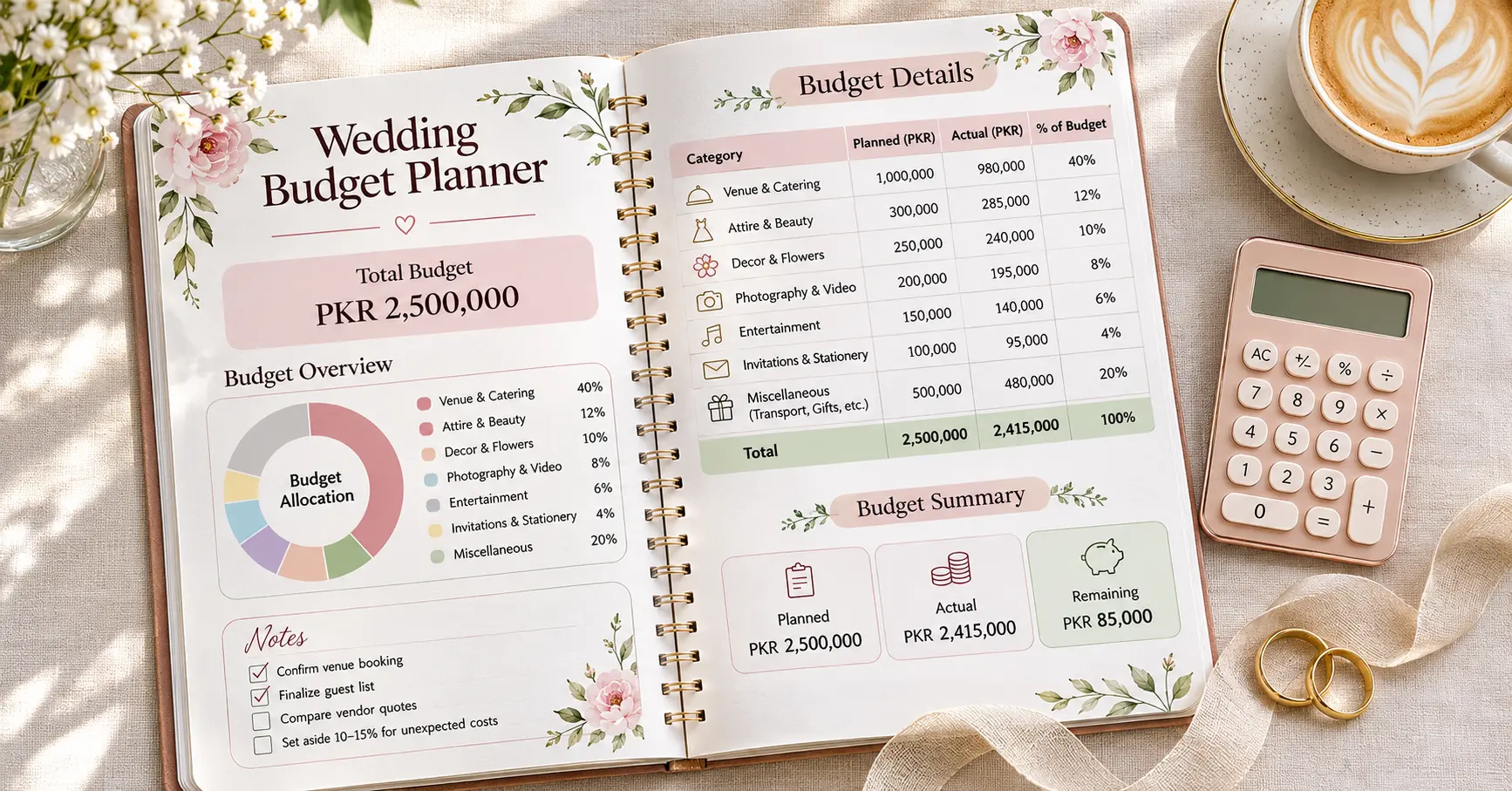

Building a realistic wedding budget planner is the single smartest move you can make before touring venues, tasting cakes, or signing a single vendor contract. Without clear numbers on paper, excitement quickly turns into financial stress, and small deposits add up faster than most couples ever expect. Whether you are planning an intimate gathering or a multi-day celebration, putting a structured spending plan in place protects your bank account and keeps you focused on what actually matters.
In this complete guide, you will learn why couples routinely blow past their initial spending limits, how to build a custom wedding budget planner in 10 simple steps, and how to divide your total fund using realistic category percentages. We also include copy-and-paste expense tracking templates, vendor payment checklists, and practical cost-cutting ideas you can apply right away.
Table of Contents
Save Hours of Formatting With Our Done-For-You Wedding Planner
Stop juggling messy spreadsheets and scattered sticky notes while planning your big day. Our 12-section Editable Wedding Planner (Canva + PDF) includes complete budget sheets, vendor payment trackers, guest lists, and seating charts in both Letter and A4 sizes.
Why Couples Overspend
Most couples do not go over budget because they are reckless with money. They overspend because wedding pricing works differently from everyday shopping, and hidden costs hide behind almost every quote. Understanding these common traps early makes your wedding budget planner dramatically easier to stick to.
First, couples often start booking vendors before establishing a firm ceiling. When you fall in love with a venue or photographer before knowing what percentage of your total fund they represent, you end up squeezing every other category to compensate. A solid wedding planning checklist always places budget creation at the very top of your timeline, right after announcing your engagement.
Second, taxes, service charges, delivery fees, and vendor gratuities rarely appear in initial base quotes. A catering package quoted at a flat per-head rate can easily jump by 20% to 30% once sales tax, staffing fees, and service charges are added to the final invoice. If your wedding budget planner only records base estimates, your actual spending will quietly outpace your plan.
Third, guest list creep silently multiplies expenses across multiple categories at once. Adding just twenty extra guests does not only increase your catering bill. It also requires extra tables, additional centerpieces, more chairs, more invitations, and extra wedding favors.
Finally, emotional decision-making and social media comparison push couples toward last-minute upgrades. Seeing luxury floral arches or custom neon signs online makes it tempting to add extras during the final month of planning. Without a written wedding budget planner to consult before every purchase, those impulse additions quickly erase your financial cushion.
10 Steps to Build a Wedding Budget Planner
Creating an accurate wedding budget planner does not require an accounting degree. Follow these ten sequential steps before you pay your first deposit to build a system that keeps every rupee or dollar accounted for.
Step 1: Have an Honest Money Conversation Together
Sit down with your partner for an uninterrupted hour to discuss your current savings, monthly income, and comfort level with spending. Decide together whether you want to pay for everything from existing savings or save a fixed amount from each paycheck until the wedding date. Agreeing on shared financial boundaries early prevents resentment later in the planning process.
Step 2: Confirm Family Contributions Early
If parents or close family members offer to help pay for the wedding, ask clarifying questions politely and early. Find out the exact amount they plan to contribute, when those funds will be available, and whether their gift comes with expectations regarding the guest list or venue choice. Never include promised money in your wedding budget planner until the amount is confirmed.
Step 3: Calculate Your Total Realistic Ceiling
Add your personal wedding savings, your planned monthly contributions between now and the wedding date, and any confirmed family gifts. Keep your emergency fund and regular living expenses completely separate from this number. The resulting figure is your absolute maximum budget ceiling, not a rough starting guess.
Step 4: Carve Out a 5% to 10% Contingency Buffer
Before assigning money to venues or outfits, immediately set aside 5% to 10% of your total fund into an untouched emergency buffer. Industry data from The Knot’s wedding budget guide highlights how unexpected costs, overtime fees, and last-minute weather rentals catch unprepared couples off guard. Putting this cushion inside your wedding budget planner from day one ensures minor surprises never force you into debt.
Step 5: Rank Your Top Three Non-Negotiables
Every couple cares deeply about different parts of their celebration. You might prioritize incredible photography and live music while keeping stationery and favors minimal, whereas another couple might invest heavily in gourmet food and floral design. Pick your top three priorities together so your wedding budget planner allocates extra funds to what you actually value most.
Step 6: Draft a Preliminary Guest Count
Your guest count is the single biggest driver of your overall wedding cost. Write down everyone you want to invite, separate them into essential family and close friends versus extended acquaintances, and calculate a realistic headcount. Knowing whether you are hosting 60 guests or 250 guests immediately shapes which venues and catering styles fit your wedding budget planner.
Step 7: Research Local Vendor Pricing Before Allocating
Before locking in category numbers, gather three real quotes for your biggest expenses, including venues, catering, photography, and attire. Local market rates vary wildly depending on your city, season, and day of the week. Grounding your wedding budget planner in actual local quotes keeps your targets realistic from the start.
Step 8: Set Up Dedicated Tracking Columns
Whether you use a printable binder, a Canva planner template, or a spreadsheet, organize every line item into clear tracking columns. Include columns for Category, Item Description, Estimated Cost, Actual Quote, Taxes and Fees, Deposit Paid, Balance Due, and Due Date. A well-structured wedding budget planner shows both what you planned to spend and what you actually owe at a glance.
Step 9: Open a Separate Wedding Checking Account
Keep all wedding funds in a dedicated bank account separate from your daily grocery and utility money. Transfer your savings and family contributions into this account, and pay every vendor invoice directly from it. Pairing a dedicated account with your wedding budget planner makes reconciling receipts effortless.
Step 10: Schedule a Monthly Budget Check-In
Put a recurring 20-minute calendar reminder on the last Sunday of every month to review your numbers together. Log recent receipts, check upcoming deposit due dates, and rebalance categories if one item comes in slightly higher or lower than projected. Consistent monthly reviews turn your wedding budget planner into a stress-free habit rather than a source of panic.
Sample Budget Split by Category (Percentages)
Once you know your working total (after removing your 5% to 10% contingency cushion), divide the remaining money across standard wedding categories. Real-world data from The Knot’s Real Weddings Study shows how typical couples distribute their spending across major vendors. Use the table below as a starting blueprint inside your wedding budget planner, then adjust percentages up or down to match your top three priorities.
| Wedding Category | Recommended % Split | Example on $20,000 Budget | Example on PKR 2,000,000 Budget | What This Covers |
| Venue & Rentals | 28% to 30% | $5,800 | PKR 580,000 | Ceremony and reception site fees, tents, tables, chairs, linens, lighting |
| Catering, Drinks & Cake | 24% to 28% | $5,200 | PKR 520,000 | Per-plate meals, appetizers, beverages, servers, wedding cake, dessert table |
| Photography & Videography | 10% to 12% | $2,200 | PKR 220,000 | Full-day photographer, second shooter, videographer, edited gallery, albums |
| Floral Design & Decor | 8% to 10% | $1,800 | PKR 180,000 | Bouquets, stage or arch florals, table centerpieces, candles, welcome signage |
| Attire, Hair & Makeup | 6% to 8% | $1,400 | PKR 140,000 | Wedding outfits, alterations, shoes, jewelry, bridal hair, makeup artists |
| Music & Entertainment | 5% to 7% | $1,200 | PKR 120,000 | DJ, live band, sound system rental, ceremony musicians, dance floor |
| Wedding Rings | 3% to 5% | $800 | PKR 80,000 | Both wedding bands, resizing, engraving, ring insurance |
| Stationery & Invitations | 2% | $400 | PKR 40,000 | Save-the-dates, printed invitations, RSVP cards, menus, postage |
| Transportation & Favors | 2% to 3% | $500 | PKR 50,000 | Bridal car, guest shuttles, welcome bags, guest favors, bridal party gifts |
| Officiant & Buffer Cushion | 3% to 5% | $700 | PKR 70,000 | Marriage license, officiant fee, vendor tips, untouched emergency reserve |
Ready-to-Copy Wedding Budget Planner Category Checklist
Copy and paste this complete line-item list directly into your notes app, spreadsheet, or wedding budget planner worksheet so you never overlook a hidden expense:
- Venue & Rentals: Ceremony site fee, reception hall fee, setup and cleanup fees, chairs, tables, linens, tableware, generator or lighting rental.
- Food & Beverage: Tasting fee, cocktail hour snacks, main buffet or plated dinner, beverages and bar service, wedding cake, cake cutting fee, catering staff service charge.
- Photo & Video: Engagement shoot, wedding day photography, videography highlight film, raw footage drive, printed wedding album.
- Flowers & Styling: Bridal bouquet, wedding party flowers, ceremony backdrop or stage, reception centerpieces, aisle runner, table numbers, welcome sign.
- Attire & Beauty: Bride and groom outfits, tailoring and alterations, undergarments and shoes, accessories, hair trial, makeup trial, wedding day beauty team.
- Entertainment: Ceremony sound setup, reception DJ or band, microphones for speeches, photo booth rental.
- Paper & Digital: Wedding website domain, save-the-date cards, main invitation suite, envelopes and stamps, ceremony programs, seating chart board.
- Logistics & Extras: Marriage registration fees, officiant honorarium, bridal transportation, guest parking or shuttle, hotel room block, vendor meals, cash tips.
If you want all of these categories pre-formatted into clean, printable, and editable Canva sheets alongside your guest list and RSVP tracker, explore the Editable Wedding Planner bundle to organize your entire wedding in one place.
Tracking Vendor Payments
Even a well-planned wedding budget planner can feel overwhelming once deposits start going out across ten different vendors. Most wedding professionals require a 25% to 50% retainer to hold your date, a second milestone payment three months out, and the final balance two weeks before the event.
Missing a payment deadline can result in late fees or canceled bookings, while forgetting how much you already paid in cash deposits leads to double payments. Keep a dedicated vendor payment log inside your wedding budget planner with clear payment milestones.
Copy-and-Paste Vendor Payment Tracker Template
Use this layout to monitor every contract, deposit, and remaining balance from booking day through wedding week:
| Vendor Name & Role | Total Contract Price | Deposit Paid & Date | Second Payment & Due Date | Final Balance & Due Date | Payment Method & Receipt Saved |
| Venue Name (Venue) | $4,500 | $1,500 (15 Nov) | $1,500 (15 May) | $1,500 (15 Aug) | Bank transfer (Receipt #01) |
| Catering Co. (Food) | $5,000 | $1,250 (01 Dec) | $1,750 (01 Jun) | $2,000 (01 Sep) | Card (Receipt #02) |
| Studio Lens (Photo) | $2,200 | $700 (10 Dec) | $0 (N/A) | $1,500 (25 Aug) | Bank transfer (Receipt #03) |
| Bloom Floral (Decor) | $1,600 | $500 (20 Jan) | $0 (N/A) | $1,100 (20 Aug) | Cash receipt signed (#04) |
| Bridal Couture (Attire) | $1,200 | $600 (05 Feb) | $0 (N/A) | $600 (15 Jul) | Card (Receipt #05) |
5 Rules for Stress-Free Vendor Payment Management
- Request itemized invoices before paying: Every invoice inside your wedding budget planner should separate base service costs, equipment rentals, taxes, and delivery charges so nothing surprises you on final billing day.
- Set calendar alerts seven days before due dates: Add every upcoming balance due date to your phone calendar with a one-week reminder so you have plenty of time to transfer funds.
- Keep a dedicated digital receipt folder: Snap a photo or save a PDF of every signed contract, bank transfer confirmation, and cash receipt in one shared cloud folder.
- Confirm vendor meal counts in advance: Many photographers, DJs, and planners require a hot meal during long receptions, which caterers usually charge at a reduced vendor rate. Log those meals in your wedding budget planner early.
- Prepare labeled cash tip envelopes the week before: Place cash gratuities for delivery drivers, musicians, and hair stylists into clearly labeled envelopes and hand them to a trusted family member or coordinator to distribute on the wedding day.
Money-Saving Ideas
Cutting costs does not mean sacrificing style or making your celebration feel cheap. Smart couples use their wedding budget planner to trim low-impact expenses so they can spend generously on hospitality, food, and memories. Here are 12 practical, proven ways to save thousands without anyone noticing.
1. Choose a Friday Evening or Sunday Afternoon Date
Saturday evenings carry the highest venue minimums and vendor rates all year. Booking a Friday evening or Sunday afternoon celebration often reduces venue rental fees by 20% to 35% and unlocks off-peak vendor discounts.
2. Trim Your Guest List by 15% to 20%
Every single guest you remove saves money across catering, drinks, rentals, centerpieces, invitations, and favors. Apply a simple rule together: if neither partner has spoken to an acquaintance in the past 18 months, leave them off the initial invite list.
3. Book an All-Inclusive or Semi-Inclusive Venue
Raw warehouse or outdoor tent weddings look affordable at first glance, but renting every fork, chair, generator, restroom trailer, and table quickly inflates your wedding budget planner. Venues that already include tables, chairs, linens, and in-house catering often cost far less overall.
4. Repurpose Ceremony Flowers at the Reception
Ask your florist to design ceremony aisle arrangements, altar pillars, and bridal party bouquets that can easily move to the reception space after photos. Place bridesmaids’ bouquets in clear glass vases on the cake table or bar, and move ceremony arches behind the sweetheart table.
5. Focus on Seasonal, Locally Grown Blooms
Importing out-of-season peonies or specialty roses drives floral quotes through the roof. Tell your florist your color palette and ask them to use lush, in-season local flowers and greenery for maximum volume at half the cost.
6. Opt for a Smaller Display Cake Plus Kitchen Sheet Cakes
Multi-tiered fondant cakes are priced per slice and require hours of intricate labor. Order a gorgeous two-tier cake for your cutting photos, then have the catering team serve matching sheet cake slices from the kitchen at a fraction of the per-serving price.
7. Send Digital Save-the-Dates and Collect Online RSVPs
Printing, stuffing, and mailing two rounds of stationery adds hundreds of dollars in paper and postage. Send stylish digital save-the-dates via email or WhatsApp, collect RSVPs online, and save your printing budget for the formal wedding invitation.
8. Swap Open Bar Cocktails for Beer, Wine, and Two Signature Drinks
Offering a full top-shelf open bar is one of the fastest ways to wreck a wedding budget planner. Serving quality wine, beer, non-alcoholic mocktails, and two custom signature cocktails keeps guests happy while cutting beverage costs nearly in half.
9. Hire a Skilled DJ Instead of a 10-Piece Live Band
A talented wedding DJ costs significantly less than a multi-piece live band, takes up less floor space, requires fewer vendor meals, and can play every song on your playlist in its original recording.
10. Shop Sample Sales or Pre-Owned Designer Attire
Bridal boutiques regularly host seasonal sample sales where designer gowns sell for 40% to 70% off retail price. You can also explore reputable bridal consignment shops or rent formal suits for the groom and groomsmen.
11. Skip Printed Ceremony Programs and Individual Menus
Most printed programs and individual dinner menus end up left behind on chairs at the end of the night. Display one beautifully designed welcome sign and a single large acrylic or chalkboard menu near the buffet or bar instead.
12. DIY Your Wedding Planning and Printable Signage With Templates
Hiring a full-service wedding planner typically consumes 10% to 15% of an entire wedding budget. If you enjoy organizing details yourself, using a structured wedding budget planner and editable Canva templates lets you design your own welcome signs, table numbers, timelines, and seating charts for a tiny fraction of custom design fees.
Get the Editable Planner With Budget and Expense Trackers
Building a wedding budget planner from scratch takes hours of formatting tables, calculating categories, and making sure no vendor detail slips through the cracks. Instead of wrestling with blank spreadsheets late at night, you can organize your entire celebration using a ready-made system designed specifically for engaged couples.
The 12-Section Editable Wedding Planner (Canva + PDF) gives you every worksheet you need in one cohesive, easy-to-use digital bundle. Inside, you get dedicated wedding budget breakdown pages, detailed expense trackers, vendor comparison and payment logs, guest list and RSVP organizers, seating chart planners, and hour-by-hour wedding day timelines. Every page comes in both US Letter and A4 sizes so you can edit colors and text in Canva or print clean copies at home.
Ready to Take Total Control of Your Wedding Spending?
Stop guessing where your money is going and plan every detail with confidence. Download our complete 12-section Editable Wedding Planner (Canva + PDF) with built-in budget sheets, expense trackers, and vendor logs today.
Final Thoughts on Your Wedding Budget Planner
A thoughtful wedding budget planner never takes the joy out of getting married; it removes the financial anxiety so you can actually enjoy your engagement. By agreeing on your ceiling early, setting aside an emergency buffer, tracking vendor payments consistently, and prioritizing what matters most to you both, you can host an unforgettable celebration without starting married life in debt.
4. FAQs
How do I start a wedding budget planner from scratch? Start by calculating your total available funds from personal savings, monthly paycheck contributions, and confirmed family gifts. Next, set aside 5% to 10% for an untouched emergency buffer, rank your top three wedding priorities, and divide the remaining money across categories like venue, catering, photography, and attire.
What percentage of a wedding budget should go to venue and catering? Venue rentals and catering combined typically account for 50% to 55% of your total wedding budget. In most standard breakdowns, roughly 28% to 30% goes toward the venue and rentals, while 24% to 28% covers food, beverages, service staff, and the wedding cake.
How much emergency buffer should I include in my wedding budget planner? You should reserve 5% to 10% of your total wedding fund as a dedicated contingency buffer. This cushion covers unexpected expenses such as sales taxes, service fees, extra guest additions, last-minute weather rentals, and vendor gratuities without forcing you to overspend.
What is the biggest expense in most wedding budgets? Catering and venue costs are almost always the two largest expenses in any wedding budget, followed closely by photography, videography, and floral decor. Because catering and rentals scale directly with your headcount, trimming your guest list is the fastest way to lower your overall wedding cost.
Is a digital spreadsheet or printable wedding budget planner better? Using both together works best for most couples. A digital template lets you update vendor quotes, payment due dates, and remaining balances easily as invoices arrive, while printed binder pages make it simple to review numbers together offline during vendor meetings and monthly budget check-ins.